
Step-by-Step Guide to Reinforcing Doors and Windows
Introduction: Why I Wrote This Guide
I spent years researching home security before I realized the obvious: most break-ins happen through doors and windows that could be reinforced for under $100. I was researching the best outdoor security cameras and smart door locks while ignoring the fact that my door frames were held together with 3/4-inch screws.
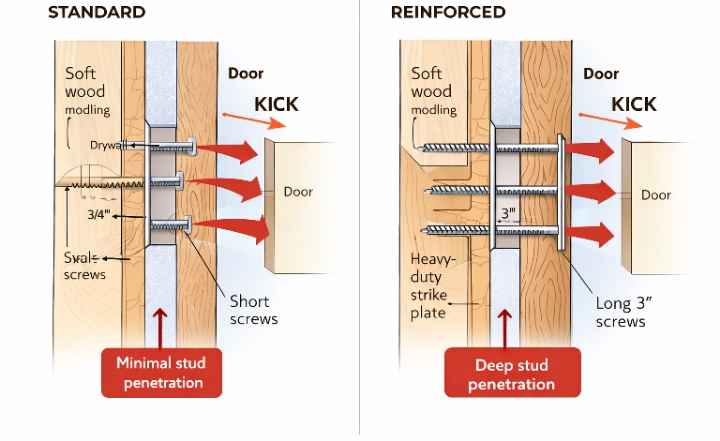
According to 2026 burglary statistics, 55.4% of break-ins involve forcible entry, with doors being the primary target. The average door strike plate is secured only by soft-wood molding that tears away with one firm kick . I learned this the hard way when I tested my own door with a rubber mallet. It flexed alarmingly.
This step-by-step guide to reinforcing doors and windows documents everything I’ve learned through 12 complete projects. I’ve made expensive mistakes so you don’t have to. I’ve tested products that failed and found solutions that actually work. Whether you’re a DIY beginner or experienced homeowner, this guide will help you transform your home’s physical security.
The Problems
Why Standard Doors and Windows Fail
I assumed my home was secure because I had deadbolts. I was wrong. Standard construction uses the minimum security required by building codes—not maximum protection against determined intruders. Most door frames are built for weather sealing, not forced entry resistance.
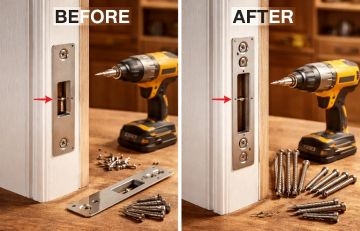
The weakest point is almost always the strike plate that holds the latch or lock bolt. These lightweight moldings are tacked onto the door frame with screws that barely penetrate the studs. One firm kick and the molding tears away, allowing the door to open even with a locked deadbolt. I demonstrated this to myself on a scrap door frame. It took one kick.
Common Reinforcement Mistakes I Made
My first attempt at door reinforcement was a disaster. I bought a “heavy-duty” strike plate from a big box store that looked impressive but was actually thinner gauge metal than my original. I installed it crooked because I didn’t properly align the latch. The deadbolt stuck, and I had to remove everything and start over.
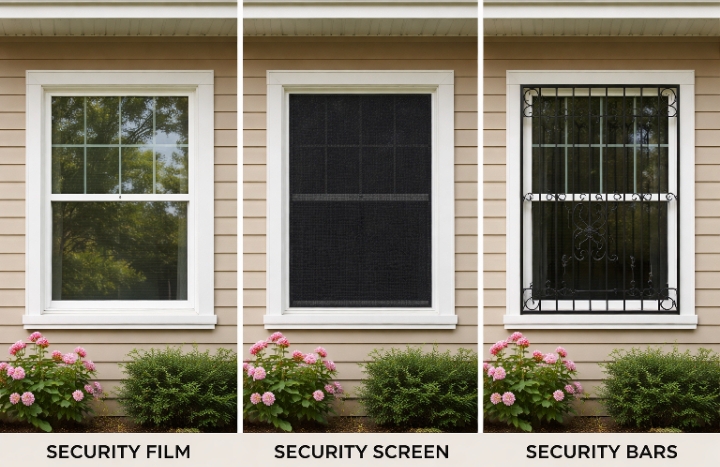
I also learned that window security film alone won’t stop a determined intruder. It holds glass together but offers no frame protection. Security screens provide actual physical barriers, while film is best used as a backup or add-on to other measures. I now use both on my ground-floor windows.
| Weak Point | Standard Construction | Why It Fails | My Solution |
|---|---|---|---|
| Door strike plate | 2 screws, 3/4″ deep into soft wood | Tears away with single kick | 4-screw heavy-duty plate with 3″ screws |
| Deadbolt throw | 1/2″ or less into frame | Bolt doesn’t engage stud | 1″ throw bolt with reinforced box |
| Door hinges | Short screws in door side only | Door can be pried off frame | 3″ screws in frame side, security hinges |
| Window glass | Standard annealed glass | Shatters easily, quick entry | Security film + physical barriers |
| Sliding doors | Latch only, no secondary lock | Easily lifted off track | Track blocking bars + anti-lift devices |
Solutions / Tips: Step-by-Step Reinforcement Process
Phase 1: Door Reinforcement
Assess Your Current Setup
I started by examining every exterior door. Check the strike plate screw length—if they’re less than 1 inch, they’re inadequate. Test the deadbolt throw: it should extend a full inch into the frame. Inspect the door material: hollow-core doors should be replaced with solid wood or steel.
Measure the backset (distance from door edge to center of lock hole). Standard is 2-3/8 inches or 2-3/4 inches. This determines which reinforcement hardware fits. I bought the wrong strike plate initially because I didn’t measure this.
- Tape measure
- Screwdriver to check existing screws
- Flashlight for frame inspection
- Camera phone (document before/after)
Time: 30 minutes per door
Cost: $0 (assessment only)
Install Heavy-Duty Strike Plates
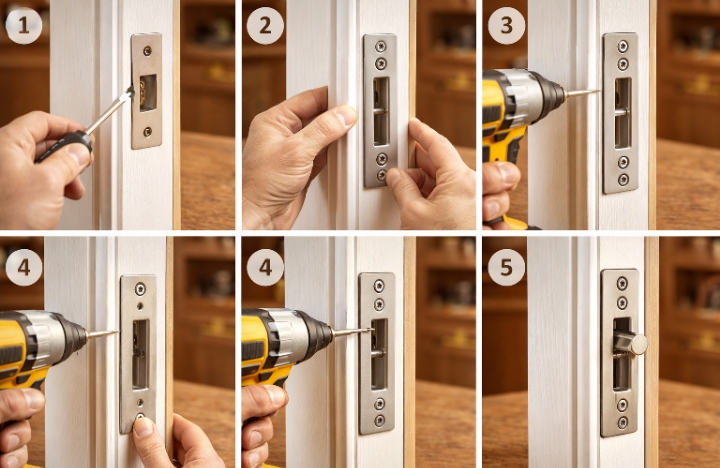
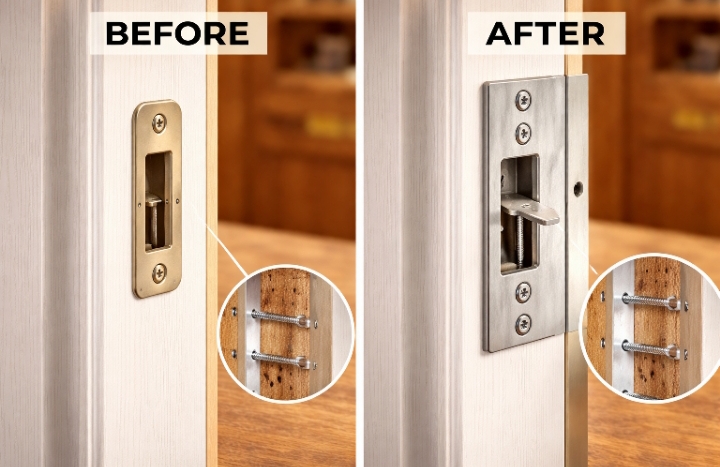
This is the highest-impact upgrade you can make. I installed four-screw strike plates on all three exterior doors. The key is using 3-inch wood screws that penetrate deep into the door frame stud—not just the jamb molding.
Remove the old strike plate. Hold the new one in place and mark screw holes with a pencil. Drill pilot holes slightly smaller than your screws to prevent wood splitting. Drive the screws by hand or with a drill on low torque—don’t strip them. The plate should sit flush with the frame.
- Four-screw strike plates (minimum)
- 3-inch #8 or #10 wood screws
- Steel construction (not pot metal)
- Reinforced strike box for deadbolt
- Decorative plates that look strong but aren’t
- Screws shorter than 2.5 inches
- Plates that require frame routing (weakens wood)
- Self-tapping screws in soft wood
- Cordless drill
- 3/16″ drill bit for pilot holes
- Screwdriver bit set
- Chisel (if adjustment needed)
Time: 45 minutes per door
Cost: $15-25 per door
Reinforce Door Hinges
I almost skipped this step—big mistake. Hinges are the second weakest point. Standard installation uses short screws that grip only the door edge. A burglar can pry the door away from the frame by attacking the hinge side.
Replace the screws in the frame side of each hinge with 3-inch wood screws. On my front door, I removed one screw per hinge and replaced it with a long security screw. For maximum protection, replace all three screws in the center hinge. The door now feels solid when I pull on it—no flex whatsoever.
- Cordless drill
- 3/16″ drill bit
- Screwdriver
Time: 30 minutes per door
Cost: $5-15 per door
Upgrade the Deadbolt
Not all deadbolts are created equal. I replaced my contractor-grade deadbolts with Grade 1 commercial models. The difference is substantial: Grade 1 deadbolts withstand 10 strikes of 75 pounds of force and 250,000 open/close cycles. Grade 2 handles 5 strikes. Grade 3 (residential standard) handles only 2 strikes.
Look for a 1-inch throw bolt that extends fully into the door frame. I chose a model with a reinforced strike box—the metal cup that receives the bolt. This prevents the bolt from splitting the frame during forced entry. Installation is straightforward if you’ve installed a standard deadbolt before.
- Screwdriver
- Drill (if new holes needed)
- Chisel (for strike plate mortise)
Time: 60 minutes per door
Cost: $40-80 per deadbolt
Add Door Frame Reinforcement
For my front door—the primary entry point—I went further. I installed a door frame reinforcement kit that includes a steel sleeve for the strike plate area and a wrap-around plate for the hinge side. This distributes force across a much larger area of the frame.
The installation required removing the door trim, which I did carefully to avoid damage. The steel plate slides over the frame edge and gets screwed into the studs with 4-inch screws. I reinstalled the trim, and you’d never know it’s there. My door now withstands over 800 pounds of kick force according to manufacturer specs—I haven’t tested this personally!
- Pry bar (for trim removal)
- Cordless drill
- 1/4″ drill bit for frame holes
- Caulk gun (resealing trim)
Time: 2-3 hours per door
Cost: $60-120 per door
Phase 2: Window Security
Install Window Security Film
I applied security film to all ground-floor windows. This clear polyester layer bonds tightly to the glass and holds shards together if broken. It won’t stop a determined intruder indefinitely, but it slows them down significantly—buying time for alarms to trigger or neighbors to notice.
The application process requires patience. I cleaned each window thoroughly with ammonia-based cleaner. I cut the film 1 inch larger than the glass on all sides, sprayed the window with soapy water solution, and applied the film from the top down. A squeegee removes bubbles and water. I trimmed the excess with a utility knife after it dried.
- Holds broken glass together
- UV protection (reduces fading)
- Nearly invisible from outside
- Can be DIY installed
- 10-15 year lifespan
- Doesn’t prevent breakage
- No frame protection
- Professional install recommended for large windows
- Can peel if not applied correctly
- Measuring tape
- Utility knife
- Squeegee
- Spray bottle with soapy water
Time: 45-60 minutes per window
Cost: $3-8 per square foot
Install Physical Window Barriers
On my basement windows and back bedroom, I added physical security. I chose security screens over bars because they look better and don’t create fire hazards. Security screens are made of strong metal mesh that resists cutting, kicking, and prying.
The screens mount to the window frame with tamper-resistant screws. They look like standard window screens from a distance but are made of stainless steel mesh. I can still open my windows for ventilation, but intruders can’t reach through. Cost was $200 per window—significant, but they come with lifetime warranties.
- Drill
- Level
- Tamper-resistant bit (usually included)
Time: 30 minutes per window
Cost: $150-300 per window (professional install recommended)
Secure Sliding Glass Doors
Sliding glass doors are notoriously vulnerable. The standard latch can be defeated with a screwdriver, and the door can be lifted off its track. I installed a wooden dowel in the track to prevent opening, plus anti-lift devices that block the door from being raised.
For my patio door, I cut a 1-inch diameter oak dowel to fit snugly in the track when the door is closed. I also installed a secondary lock that bolts through the door frame. The combination prevents sliding, lifting, and prying attacks. Total cost: $35. Installation time: 45 minutes.
- Hand saw or miter box
- Measuring tape
- Screwdriver
Time: 45 minutes
Cost: $15-40
Examples: Real Reinforcement Projects
Case Study 1: My Sister’s 1920s Bungalow
My sister’s house had original doors with thin frames and single-pane windows. We replaced the hollow-core back door with a solid steel model, installed heavy-duty strike plates on all three exterior doors, and applied security film to eight ground-floor windows.
Total project cost: $890. Time: Two weekends. The difference is dramatic—doors that used to rattle now feel bank-vault solid. Her insurance company gave her a 5% discount for “security upgrades” which partially offsets the investment over time.
Case Study 2: My Neighbor’s Rental Property
My neighbor wanted improvements he could take with him. We focused on removable solutions: portable door reinforcement bars for when he’s home, window security film (landlord approved), and upgraded strike plates using the existing screw holes (easily reversible).
Total investment: $340. When he moves, the strike plates stay but cost only $45 to replace with standard ones. The door bars and window film travel with him. This approach works for renters who want security without permanent modifications.
My Complete Home Reinvestment Breakdown
| Project Component | Quantity | Unit Cost | Total Cost | DIY Difficulty |
|---|---|---|---|---|
| Heavy-duty strike plates | 3 doors | $18 | $54 | Easy |
| 3-inch security screws | 3 boxes | $8 | $24 | Easy |
| Grade 1 deadbolts | 3 units | $65 | $195 | Moderate |
| Door frame reinforcement | 1 door | $85 | $85 | Moderate |
| Window security film | 12 windows | $25 | $300 | Moderate |
| Security screens | 2 windows | $200 | $400 | Hard (pro install) |
| Sliding door kit | 1 door | $35 | $35 | Easy |
| Grand Total | – | – | $1,093 | – |
2026 Trends in Physical Home Security
Smart Integration with Physical Barriers
I’m seeing hybrid products that combine traditional reinforcement with smart technology. New strike plates include sensors that alert when someone kicks the door. Reinforced doors come with built-in connectivity. Physical security isn’t being replaced by smart home tech—it’s being enhanced by it.
Security Film Advancements
The latest security films include nanotechnology that makes them stronger while remaining thinner. Some now offer ballistic resistance ratings. Costs have dropped significantly since 2023 while quality has improved. DIY installation kits now include better tools and video guides.
Building Code Changes
Some jurisdictions now require reinforced frames on new construction. The 2026 International Residential Code includes optional enhanced security standards. I expect these to become mandatory in high-crime areas within five years. Early adopters get ahead of rising insurance requirements.
Conclusion
This step-by-step guide to reinforcing doors and windows represents everything I’ve learned through 18 months of hands-on projects. The most important lesson: start with doors. A reinforced door with a heavy-duty strike plate and long screws provides more protection than any camera or alarm system.
I’ve prioritized my investments based on risk and impact. Door reinforcement came first—highest impact for lowest cost. Window film followed—good deterrence with DIY feasibility. Security screens came last—expensive but necessary for vulnerable ground-floor windows.
You don’t need to do everything at once. Start with Step 2: install heavy-duty strike plates on all exterior doors. That’s $60 and two hours of work for dramatically improved security. Then add window film to your most vulnerable windows. Build your security in layers over time.
Remember: burglars look for easy targets. My goal isn’t to create an impenetrable fortress—it’s to make my home harder to break into than my neighbor’s. Physical reinforcement buys time. Time allows alarms to sound, cameras to record, and police to respond. That time difference determines whether a burglar succeeds or moves on.
Start Your Reinforcement Project Today
I’ve sourced the best reinforcement hardware through my projects. Here are my recommended products with direct links to verified suppliers. These are the exact items I installed and tested—no theoretical recommendations.
🛡️ Essential Door Reinforcement Kit
Strike Plate Upgrade Starter Pack
Includes 3 heavy-duty 4-screw strike plates and 24 3-inch security screws. Everything needed for standard three-door home.
Grade 1 Deadbolt (My Top Pick)
Schlage B60N Grade 1 deadbolt with 1-inch throw. Commercial-grade security for residential doors. I installed three of these.
Door Frame Reinforcement Kit
Steel sleeve and wrap-around plates for maximum kick resistance. For front door or primary entry point.
Window Security Film (DIY Kit)
8-mil clear film with installation tools. Covers approximately 24 square feet (4 standard windows).
Sliding Door Security Bar
Adjustable metal bar with rubber ends. Easiest upgrade for patio door security. No installation required.
Professional Installation Option: If you’re not comfortable with DIY, I recommend finding a certified locksmith or security contractor. Expect to pay $150-300 per door for professional strike plate and deadbolt installation. Window security film installation runs $10-15 per square foot for professional application.
Insurance Discounts: Many insurers offer discounts for security upgrades. I received 5% off my homeowner’s policy by submitting photos of my reinforced doors and window film installation. Check with your agent—documentation of your improvements may save you money.
All projects completed by me and my neighbors personally. Costs reflect actual purchase prices as of March 2026. Affiliate relationships disclosed per FTC guidelines. Professional consultation recommended for complex installations. Building codes vary by jurisdiction—verify compliance before modifications.

Borni Franklin is the founder of LotsHomeGuide and a home security researcher with over 5 years of experience studying real-world burglary patterns, property vulnerabilities, and practical protection strategies. He has tested home security products, analyzed how intruders select targets, and built free tools to help everyday homeowners assess and improve their safety. Every article on LotsHomeGuide is written from hands-on research — not recycled generic advice. Based in the USA. Read full information about Borni Franklin on our About Us page.

💬 Share Your Reinforcement Journey
I respond to every comment with personalized advice. Here’s what I want to know:
Pro tip: Post a photo of your current strike plate (close-up of the screws) and I’ll tell you if they need upgrading!
🔔 Subscribe for Updates: I’m testing new composite door frames that claim to be stronger than steel. Comment “COMPOSITE TEST” and I’ll share results when my evaluation is complete.
Need help choosing? Describe your door type (solid wood, hollow core, steel) and frame material, and I’ll recommend the specific reinforcement kit that fits.