
Anonymous Digital Value Transfer: How Lotsvia Protects Privacy
In an age where personal data is constantly tracked, sold, and monitored, financial privacy has become one of the most important yet endangered rights. Lotsvia was built to restore that privacy — enabling secure, anonymous digital value transfers without exposing users to unnecessary risks or identity leakage.
Why Privacy Matters in Digital Value Transfer
Traditional financial systems were never designed with privacy as a priority. Banks, payment processors, and third-party platforms often require excessive personal information, identity verification, and permanent transaction records. While these systems may offer convenience, they also expose users to:
- Data breaches and leaks
- Unwanted tracking and profiling
- Account freezes and restrictions
- Loss of financial freedom
- Third-party surveillance
Lotsvia approaches digital finance differently. Instead of asking, “Who are you?” the platform asks, “What value do you want to exchange — securely and responsibly?”
What Is Anonymous Digital Value Transfer?
Anonymous digital value transfer refers to the ability to send, receive, store, or redeem digital value without revealing personal identity, banking credentials, or sensitive private data to the public or unnecessary intermediaries.
With Lotsvia, anonymity does not mean lawlessness or chaos. It means:
- No public transaction exposure
- No forced identity disclosure
- No unnecessary KYC barriers
- No dependency on foreign bank accounts
- No tracking of personal relationships between users
The result is a system that respects privacy while maintaining structure, accountability, and security.
How Lotsvia Is Designed for Privacy From the Ground Up
1. Minimal Data Collection
Lotsvia only collects essential information required to keep the platform functional and secure. This typically includes:
- Email address for communication
- Basic account credentials
- System-generated identifiers
There is no requirement to upload government IDs, selfies, passports, or bank statements. This drastically reduces the risk of identity theft and data exposure.
2. Anonymous Wallet Architecture (Lotsvia Vault)
The Lotsvia Vault functions as a private digital wallet. Wallet balances are associated with internal system IDs, not publicly visible personal details.
This means:
- No public wallet addresses
- No visible transaction trails between users
- No external tracking of wallet activity
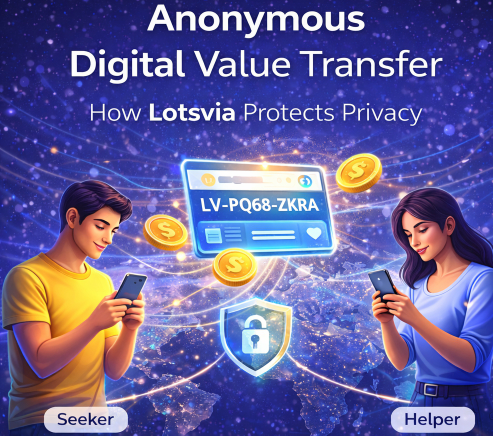
Even helpers and seekers interacting on the platform remain anonymous to each other.
The Role of Seekers and Helpers in a Privacy-First System
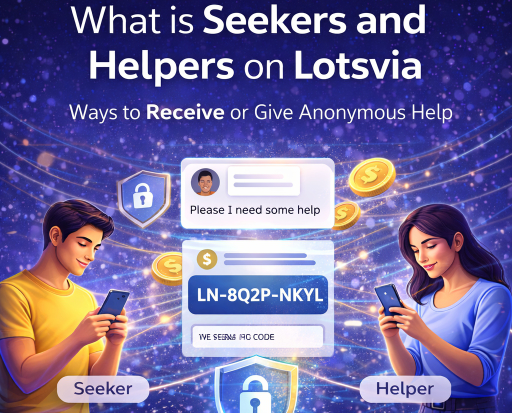
One of Lotsvia’s most unique innovations is the **Seekers and Helpers** model — a human-centered approach to digital value exchange.
Who Are Seekers?
Seekers are individuals or entities looking for support, value exchange, or assistance. This could be financial help, digital value transfer, or secure receipt of funds without exposure.
Who Are Helpers?
Helpers are users who voluntarily choose to assist seekers. They do so without knowing the seeker’s real identity, location, or personal background.
This design ensures:
- No personal profiling
- No emotional manipulation
- No obligation beyond voluntary help
Lotsvia does not store or track relationships between helpers and seekers. Interactions are anonymous, value-focused, and respectful.
Value Codes: Privacy Without Direct Transfers
Instead of sending money directly from one wallet to another, Lotsvia introduces **Value Codes** — a privacy-preserving alternative.
How Value Codes Protect Privacy
- Codes are generated from wallet value
- Codes are stored in hashed form
- Codes can be shared without revealing identity
- Redemption does not expose the sender
A seeker can receive a Value Code and redeem it without ever knowing who generated it. Likewise, the helper never sees who redeemed the code.
This method eliminates direct financial links between users — a major privacy advantage over traditional payment systems.
No Public Ledger, No Blockchain Exposure
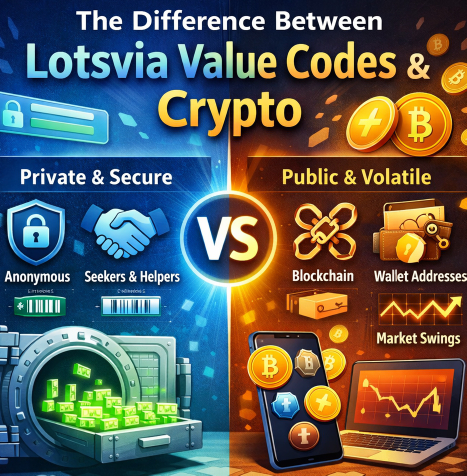
Unlike many crypto-based systems that claim anonymity but expose transactions on public blockchains, Lotsvia does not rely on public ledgers.
There is:
- No public transaction history
- No address scanning
- No permanent blockchain footprint
All value movements remain internal, private, and shielded from public analysis tools.
Security Without Surveillance
Lotsvia proves that security does not require invasive surveillance.
The platform uses:
- Encrypted data storage
- Hashed sensitive values
- Secure server-side validation
- Controlled access permissions
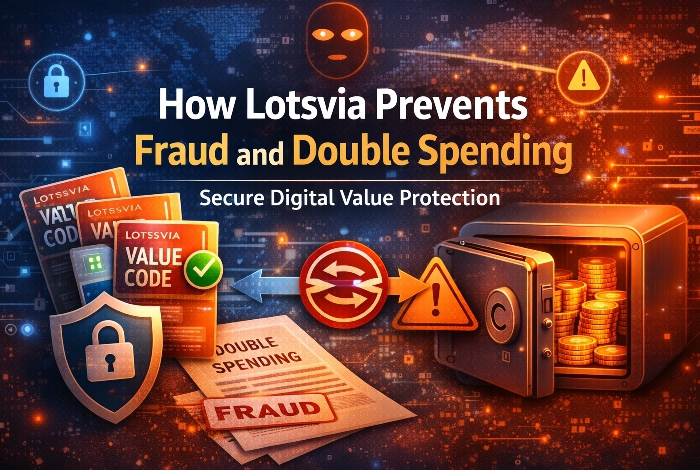
Fraud prevention focuses on behavior patterns and system integrity — not personal identity harvesting.
Global Access Without Borders
Lotsvia enables users to receive digital value globally without needing:
- A foreign bank account
- International wire transfers
- Currency conversion stress
- Third-party payment approvals
This makes Lotsvia especially powerful for freelancers, remote workers, digital creators, helpers, and individuals in underbanked regions.
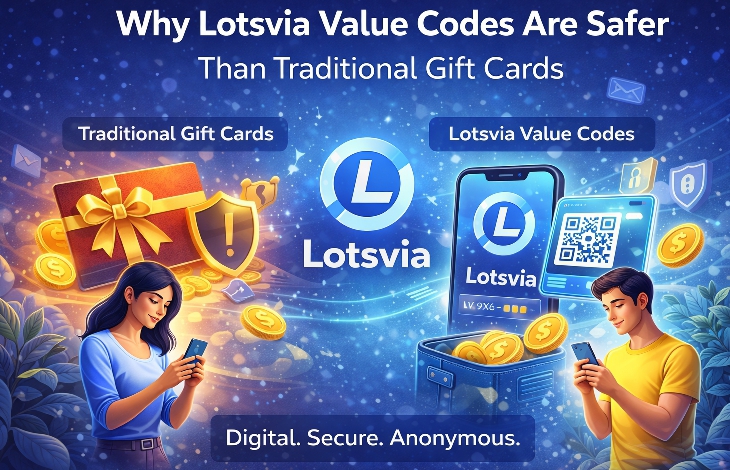
Why Lotsvia Is Safer Than Traditional Systems
| Traditional Platforms | Lotsvia |
|---|---|
| Heavy identity verification | Minimal data requirement |
| Public or traceable transfers | Private value codes |
| Bank dependency | Independent digital vault |
The Future of Privacy-First Digital Finance
As regulations tighten and data exploitation increases, platforms like Lotsvia represent the future of ethical fintech — systems that respect user dignity, privacy, and autonomy.
Lotsvia is not about hiding wrongdoing. It is about:
- Empowering individuals
- Protecting personal boundaries
- Encouraging voluntary help
- Removing unnecessary barriers
In a world that tracks everything, privacy becomes a form of freedom. Lotsvia exists to preserve that freedom.
Final Thoughts
Anonymous digital value transfer is no longer a luxury — it is a necessity. Lotsvia stands at the intersection of privacy, security, and humanity, offering a platform where seekers can receive help, helpers can give freely, and everyone remains protected.
Lotsvia is not just a platform. It is a statement — that privacy still matters.