
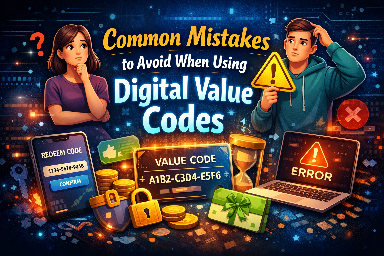

Common Mistakes to Avoid When Using Digital Value Codes

Value Codes

Digital Value Codes
AdAdvertisement
Common Mistakes to Avoid When Using Digital Value Codes | Lotsvia

Common Mistakes to Avoid When Using Digital Value Codes

Digital value codes (DVCs) have become a cornerstone of modern FinTech solutions, allowing users to transfer value, claim rewards, or complete transactions in a secure and convenient way. However, using digital value codes improperly can lead to lost opportunities, errors, or even security risks. In this comprehensive guide, we’ll explore common mistakes made by both seekers (code redeemers) and helpers (code creators), and provide clear, actionable tips to maximize safety and effectiveness.

1. Not Understanding the Digital Value Code System

One of the most common mistakes is failing to understand how digital value codes work. Many users treat DVCs as simple coupon codes, without realizing the technical or transactional mechanisms behind them.

  • Seekers: Redeeming codes without understanding the platform rules or expiration date.
  • Helpers: Creating codes without clearly defining their value or usage limits.
Tip: Always read platform instructions and understand the code’s parameters before using or distributing it.

2. Sharing Codes Publicly or Insecurely

Security is critical when dealing with DVCs. Codes represent monetary or reward value, and sharing them carelessly can lead to theft or fraud.

  • Never post active codes on public forums or social media unless the platform explicitly allows it.
  • Use secure channels like authenticated apps or private messaging for code distribution.
Tip: Encrypt codes in communication, or use platform-specific sharing links to prevent unauthorized access.

3. Ignoring Expiration and Usage Limits

Most digital value codes have a limited lifespan or usage count. Ignoring these limits is a frequent mistake that results in wasted codes or unclaimed rewards.

AdAdvertisement

  • Seekers: Waiting too long to redeem a code.
  • Helpers: Not communicating expiration dates clearly to code recipients.

4. Using the Wrong Platform or Application

Digital value codes are usually platform-specific. Attempting to redeem a code on the wrong platform or unsupported application can render it useless.

  • Always verify the platform requirements before entering a code.
  • Helpers should provide clear instructions for redeeming the code within the correct ecosystem.

5. Entering Codes Incorrectly

Simple typing errors can invalidate a code. Many users lose value simply due to misplacement of letters, numbers, or symbols.

  • Double-check the code before submission.
  • Copy-paste codes when possible, ensuring no extra spaces or hidden characters.
Tip: Some platforms offer QR code scanning to minimize manual entry errors—use it if available.

6. Ignoring Verification Steps

Many platforms require verification steps for both seekers and helpers to validate authenticity and ensure security. Skipping verification can block access or prevent rewards.

  • Seekers may need to verify their account or confirm identity.
  • Helpers may need to authenticate before generating codes to prevent fraudulent distribution.

7. Overlooking Data Privacy and Compliance

Digital value codes often involve personal or financial data. Not following privacy best practices can expose sensitive information and violate platform regulations.

  • Seekers: Avoid entering codes on unverified websites or apps.
  • Helpers: Never collect or store personal data without proper consent.

8. Not Tracking Redemptions and Budgets

For helpers, failing to monitor code usage can lead to overspending or misuse. Similarly, seekers may not track their redeemed codes efficiently.

  • Implement tracking dashboards to monitor code redemptions.
  • Set budget limits per code batch to avoid accidental over-distribution.
Tip: Many FinTech platforms provide analytics to help both seekers and helpers maintain control and transparency.

9. Ignoring Device or Connectivity Issues

Digital codes can fail due to poor connectivity or incompatible devices. Users should ensure reliable internet access and compatible apps.

10. Failing to Understand Reward Distribution Rules

Many platforms have specific rules about reward distribution—how much the seeker receives, how the helper’s budget is deducted, and timeframes for fulfillment. Misunderstanding these rules can cause dissatisfaction or disputes.

Best Practices for Seekers

  • Always redeem codes immediately upon receipt.
  • Use secure, official applications for redemption.
  • Keep a personal log of redeemed codes to avoid duplicates.
  • Read platform FAQs or help sections before attempting redemption.

Best Practices for Helpers

  • Set clear terms and expiration for every code issued.
  • Monitor budget and redemption status regularly.
  • Use platform analytics to track code effectiveness and engagement.
  • Educate users on proper redemption process to maximize satisfaction.

Interactive Tips

Consider implementing interactive features on your website or app to reduce mistakes, such as:

  • Real-time validation of code entries.
  • Countdowns for expiration and usage limits.
  • Visual feedback on successful redemption or errors.
  • Help popups explaining each step for seekers and helpers.

Conclusion

Digital value codes are powerful tools in the FinTech ecosystem, but they require careful handling by both seekers and helpers. Avoiding common mistakes like insecure sharing, ignoring expiration, misentry, or skipping verification steps will ensure a smooth, safe, and rewarding experience for everyone involved.

FAQs

  • Q: What is a digital value code?
    A: A digital value code (DVC) is a code that represents monetary or reward value within a specific platform or application.
  • Q: How do I redeem a DVC safely?
    A: Always use official apps or websites, avoid public sharing, and double-check the code before submitting.
  • Q: Can helpers monitor code usage?
    A: Yes, most platforms provide analytics and dashboards to track code redemptions in real-time.
  • Q: Are digital value codes secure?
    A: Yes, if used properly through verified channels and with proper verification steps.
  • Q: What is the difference between seekers and helpers?
    A: Seekers redeem the codes to claim rewards; helpers create and distribute codes to share value.

Share This:

Leave a Reply

Your email address will not be published. Required fields are marked *

Finance

Why Some Digital Transactions Can’t Be Reversed

Why Some Digital Transactions Can’t Be Reversed | Fintech & Digital Payments Explained Why Some Digital Transactions Can’t Be Reversed In today’s fast-moving digital economy, sending and receiving value online has become almost effortless. With a few taps on a screen, money or digital value can move from one person to another in seconds. However…

Why Financial Access Is Replacing Bank Accounts

Why Financial Access Is Replacing Bank Accounts Why Financial Access Is Replacing Bank Accounts Traditional banking has long been the backbone of financial activity, but over the past decade, a shift has emerged. Many people no longer rely solely on bank accounts to store, send, or receive value. Instead, digital wallets and alternative financial systems…

TFSA vs FHSA Limits 2026: Where Should Canadians Invest First?

TFSA vs FHSA Limits 2026: Where Should Canadians Invest First? The question many Canadians are quietly Googling right now is simple but important: TFSA vs FHSA limits 2026 — where should I invest first? With rising housing prices, higher interest rates, and tighter budgets, choosing the right registered account can make a real difference to…

‎Prepaid Digital Value vs Bank Money: What’s the Difference?

Prepaid Digital Value vs Bank Money: What’s the Difference? Prepaid Digital Value vs Bank Money: What’s the Difference? Money has changed. What we once understood strictly as “bank money” is now sharing space with prepaid digital value systems that operate outside traditional banking infrastructure. At first glance, both may look similar because both are used…

Oklo vs NuScale: Which Nuclear SMR Stock Has Better 2026 Upside?

Oklo vs NuScale: Which Nuclear SMR Stock Has Better 2026 Upside? As global electricity needs surge due to artificial intelligence, data centers, and industrial electrification, investors are paying closer attention to Nuclear SMR companies. Two names dominate most discussions: Oklo stock and NuScale stock. Both are positioned within the Small Modular Reactor space, yet their…

Nuclear SMR Stocks to Watch as AI Energy Demand Explodes

Nuclear SMR Stocks to Watch as AI Energy Demand Explodes The conversation around Nuclear SMR stocks has changed dramatically in recent years, and in 2026 it is being reshaped by one powerful force: AI energy demand. Data centers running large language models, autonomous agents, and real-time analytics are consuming unprecedented amounts of electricity. Traditional power…

How Lotsvia Prevents Fraud and Double Spending

How Lotsvia Prevents Fraud and Double Spending | Secure Digital Value Protection How Lotsvia Prevents Fraud and Double Spending In the modern digital economy, trust is everything. As more people rely on online platforms to store, transfer, and receive digital value, concerns about fraud and double spending continue to grow. Understanding how platforms like Lotsvia…

How Digital Value Moves Without Traditional Banks

How Digital Value Moves Without Traditional Banks How Digital Value Moves Without Traditional Banks For decades, banks were the primary gatekeepers of money movement. Sending, receiving, or storing value almost always required a bank account, identity verification, and centralized approval. Today, financial technology has changed that reality. Digital value can now move securely without relying…

Capital Gains Inclusion Rate 2.0: How Canadians Can Protect Profits

Capital Gains Inclusion Rate 2.0: How Canadians Can Protect Profits The phrase Capital Gains Inclusion Rate 2.0 has been quietly making waves across Canada — and if you invest, save, trade digital assets, or even sell property, this affects you more than you might think. In simple terms, Canada’s capital gains rules are changing, and…
  • 1
  • 2

Lotsvia Platform

Why Some Digital Transactions Can’t Be Reversed

Why Some Digital Transactions Can’t Be Reversed | Fintech & Digital Payments Explained Why Some…

Read More

Why Lotsvia Value Codes Are Safer Than Traditional Gift Cards

Why Lotsvia Value Codes Are Safer Than Traditional Gift Cards Why Lotsvia Value Codes Are…

Read More

Why Financial Access Is Replacing Bank Accounts

Why Financial Access Is Replacing Bank Accounts Why Financial Access Is Replacing Bank Accounts Traditional…

Read More

What Makes a Digital Wallet Truly Secure

What Makes a Digital Wallet Truly Secure What Makes a Digital Wallet Truly Secure Security…

Read More

What is Seekers and Helpers on Lotsvia: Ways to Receive or Give Anonymous Help

What is Seekers and Helpers on Lotsvia: Ways to Receive or Give Anonymous Help What…

Read More

What Is Lotsvia? A Complete Guide to Digital Value Exchange

What Is Lotsvia? A Complete Guide to Digital Value Exchange What Is Lotsvia? In today’s…

Read More

digital wallet

What Is a Digital Wallet and How Does It Work?

<!DOCTYPE html> What a digital Wallet-network-knowledge-base/” style=”color:#1e73be; text-decoration:underline;”>Wallet-network-knowledge-base is, howit works, and how it is…

Read More

The Difference Between Lotsvia Value Codes and Crypto

The Difference Between Lotsvia Value Codes and Crypto | Secure Digital Value Explained The Difference…

Read More

‎Prepaid Digital Value vs Bank Money: What’s the Difference?

Prepaid Digital Value vs Bank Money: What’s the Difference? Prepaid Digital Value vs Bank Money:…

Read More

Make Money Online

No post found