
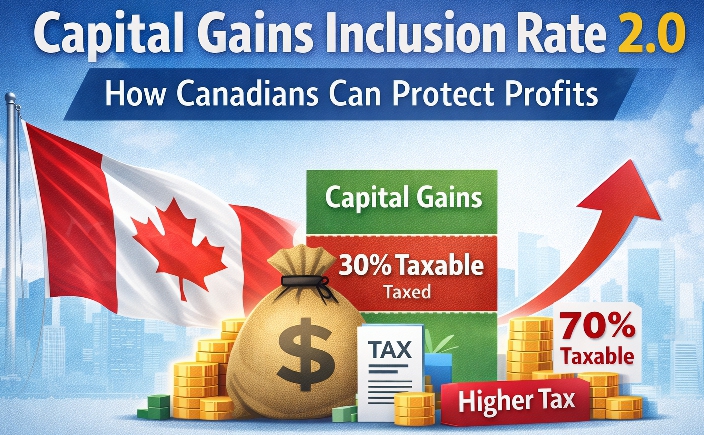

Capital Gains Inclusion Rate 2.0: How Canadians Can Protect Profits
The phrase Capital Gains Inclusion Rate 2.0 has been quietly making waves across Canada — and if you invest, save, trade digital assets, or even sell property, this affects you more than you might think.
In simple terms, Canada’s capital gains rules are changing, and many Canadians are worried about one thing: how much more tax they might end up paying. This guide explains what Capital Gains Inclusion Rate 2.0 really means, how Canada capital gains tax works today, what’s changing, and — most importantly — how everyday Canadians can legally protect their profits without breaking rules or falling for “get rich quick” nonsense.
No accounting jargon. No scare tactics. Just clear, practical information written like a human talking to another human — because that’s how money conversations should be.
What Is Capital Gains Inclusion Rate 2.0?
The capital gains inclusion rate determines how much of your profit is considered taxable income in Canada. Under the traditional system, only a portion of your capital gains is added to your taxable income — not the full amount.
Capital Gains Inclusion Rate 2.0 refers to proposed or adjusted rules that increase the portion of capital gains subject to tax, particularly for higher-income individuals and certain asset classes. While exact thresholds may vary, the overall direction is clear: more capital gains will be taxed more heavily.
If you’ve ever sold stocks, crypto, digital value, real estate (other than a primary residence), or business assets, this change matters to you.
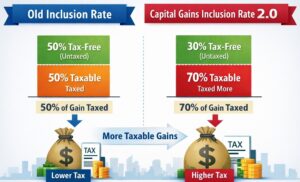 “Old Inclusion Rate vs Capital Gains Inclusion Rate 2.0” with taxable portions highlighted.
How Canada Capital Gains Tax Works (Plain English)
Let’s make this painfully simple.
If you buy something for $1,000 and sell it later for $1,500, your capital gain is $500. Canada does not tax the full $500 — it taxes a percentage of it, based on the inclusion rate.
Under newer proposals tied to Canada capital gains tax reforms, that taxable portion may increase — meaning more of your gain gets added to your income and taxed at your personal rate.
This applies to assets such as stocks, ETFs, investment properties, crypto assets, and even certain forms of digital value movement.
Why Capital Gains Inclusion Rate 2.0 Exists
Governments don’t wake up one day and randomly decide to adjust tax rules. Capital Gains Inclusion Rate 2.0 is largely driven by three things:
- 📈 Rising wealth inequality
- 📉 Growing public debt and spending
- 🔍 Increased visibility into digital and investment transactions
In short: capital is more visible, easier to track, and politically easier to tax than wages. That’s why planning matters more than ever.
Who Is Most Affected by Capital Gains Inclusion Rate 2.0?
Not everyone feels this equally. The people most affected include:
- Active investors and traders
- Crypto and digital asset holders
- Small business owners planning exits
- Canadians holding investment properties
- High-income earners with non-registered portfolios
If you rely on capital appreciation rather than salary alone, Capital Gains Inclusion Rate 2.0 becomes a real planning issue, not a theoretical one.
Real-Life Example (No Accounting Degree Required)
Let’s say Sarah invests $20,000 in a mix of stocks and digital assets. Five years later, it grows to $60,000. That’s a $40,000 capital gain.
Under older rules, only a portion of that $40,000 would be taxable. Under Capital Gains Inclusion Rate 2.0, a higher portion is included in her taxable income — meaning she pays more tax, even though the investment decision stayed the same.
The key lesson? Timing, structure, and strategy now matter more than ever.
How Canadians Can Legally Protect Profits
This is the section everyone scrolls for — and yes, there are legitimate ways to reduce the impact of Canada capital gains tax without breaking rules.
1. Use Registered Accounts Properly
TFSA and RRSP accounts remain powerful tools. Capital gains inside a TFSA are not taxed, regardless of inclusion rate changes. If you’re actively investing, placing growth assets in registered accounts matters more now.
2. Understand How Digital Value Is Treated
Not all value moves the same way. Understanding how digital value moves without traditional banks can help Canadians structure transactions more intelligently, especially when timing gains and losses.
Similarly, learning the difference between digital value codes and crypto helps avoid tax reporting mistakes that trigger audits.
3. Track Cost Basis Like Your Life Depends on It
One of the most common (and costly) mistakes is poor record keeping. Knowing your true cost basis ensures you don’t overpay taxes when capital gains inclusion rates increase.
This is especially important for people using modern wallets and value systems. Understanding how a digital wallet actually works is no longer optional — it’s defensive finance.
4. Harvest Losses Strategically
Capital losses can offset capital gains. In years when inclusion rates rise, loss harvesting becomes a powerful — and completely legal — planning strategy.
5. Avoid Panic Selling
Tax changes often cause emotional decisions. Selling assets just because of Capital Gains Inclusion Rate 2.0 can backfire. Planning beats reacting — every time.
Capital Gains Inclusion Rate 2.0 and Digital Finance
Canada’s tax system is still catching up with modern financial tools. Whether you’re using digital wallets, prepaid value, or alternative payment platforms, clarity matters.
Articles like what a digital wallet is and how it works and digital value codes vs online payment platforms help Canadians understand where tax obligations begin and end.
Common Mistakes Canadians Make Under New Capital Gains Rules
- Ignoring small gains that add up
- Misreporting digital asset transactions
- Overlooking loss carryforwards
- Using poor-quality tax software blindly
Many of these mistakes are covered in guides like common mistakes to avoid when using digital value systems, which apply more broadly than most people realize.
What This Means for the Future of Investing in Canada
Capital Gains Inclusion Rate 2.0 signals a shift. Canada is moving toward tighter, more transparent taxation — especially on capital and digital finance. This doesn’t mean investing is bad. It means investing requires awareness.
Canadians who educate themselves, plan ahead, and understand modern financial tools will always be ahead of the curve — regardless of tax changes.
Final Thoughts
Capital Gains Inclusion Rate 2.0 is not the end of profit — it’s the end of ignorance. Those who understand Canada capital gains tax, track their assets properly, and use available tools intelligently will continue to protect and grow wealth legally.
The goal isn’t to avoid tax — it’s to avoid unnecessary tax. And those are very different things.
Related Topics
- Why Financial Access Is Replacing Bank Accounts
- What Makes a Digital Wallet Truly Secure
- Prepaid Digital Value vs Bank Money
- Why Some Digital Transactions Can’t Be Reversed
- Bipartisan Tax Act 2026 Explained