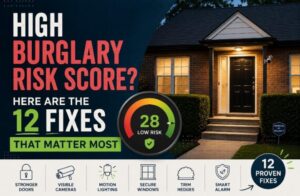
I will tell you something that surprised me when I first started researching residential security: burglars are often more predictable than many homeowners realize. A burglar does not necessarily need to find a complicated way into a home. Many residential burglaries involve ordinary entry points such as doors, windows, garages, and other accessible areas that are unlocked, poorly secured, hidden from view, or easy to reach.
Of course, burglary patterns are not exactly the same everywhere in the United States. A home in a dense neighborhood of Chicago may have different security concerns from a suburban property in Texas. A house in Atlanta may have different vulnerabilities from an apartment in New York City or a detached home in Los Angeles.
The design of the property also matters. A single-family home with an attached garage, a basement, a fenced backyard, and several ground-floor windows has a different security profile from a second-floor apartment or a townhouse in a planned community.
Still, one broad lesson appears repeatedly in residential burglary research: doors and windows deserve serious attention when assessing home security. Research has identified doors and windows as important entry points, although the exact percentages vary depending on the location, housing type, and dataset being studied.
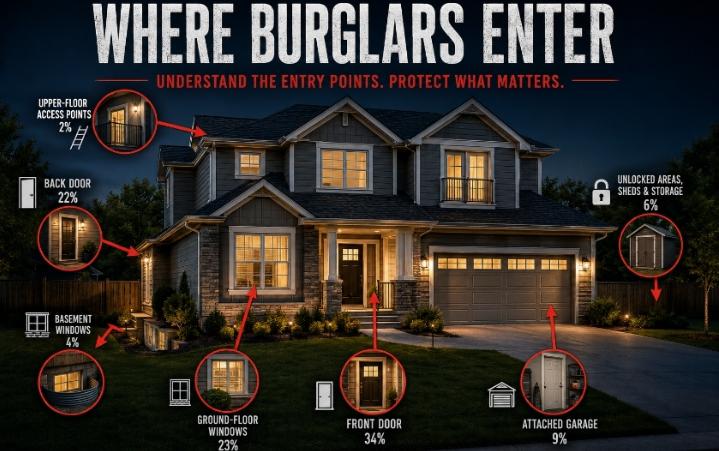
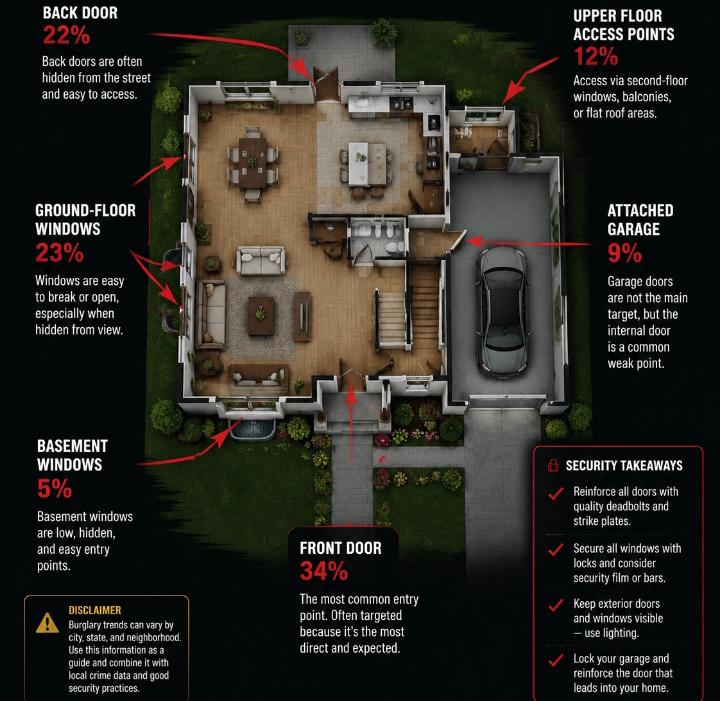
Important note about the percentages: The percentages in this article come from a commonly cited residential burglary entry-point breakdown published by ADT and attributed to the International Association of Certified Home Inspectors. They should be viewed as a general reference rather than a universal statistic that applies identically to every American city, state, or neighborhood.
So, where do burglars usually enter a house first? The most useful answer is to look at the common entry points and then compare them with the specific weaknesses around your own home.
Entry Point #1 — The Front Door (Commonly Cited: 34%)
The front door is one of the most important parts of your home’s security because it is usually the primary entrance. It is also one of the areas where homeowners sometimes focus only on the lock and forget about the rest of the door system.
A front door can have a good deadbolt and still have weaknesses elsewhere. The door frame may be damaged or poorly secured. The strike plate may not be properly reinforced. The door itself may be hollow or lightweight. Hinges may be exposed, depending on the design.
This is why the better question is not simply, “Do I have a lock?” The better question is: Can the entire door system resist forced entry?
The commonly cited 34% figure comes from a breakdown published by ADT and attributed to the International Association of Certified Home Inspectors. It should not be interpreted as a current FBI statistic or as a precise percentage for every state in the United States.
What to check on your front door
- Is the door solid and in good condition?
- Is the door frame firmly attached and free from significant damage?
- Is the deadbolt properly installed?
- Are the hinges exposed on the exterior side?
- Does the door contain large glass panels that require additional consideration?
- Is the entryway well-lit at night?
- Can visitors be identified before the door is opened?
- Do you regularly leave the door unlocked when you are home?
A strong door is only useful when it is properly closed and locked. Everyday habits matter too. Leaving doors unlocked, hiding spare keys in obvious locations, or failing to close garage-to-house doors can undermine otherwise good security.
See my full guide: Step-by-Step Guide to Reinforcing Doors and Windows
Entry Point #2 — Ground-Floor Windows (Commonly Cited: 23%)
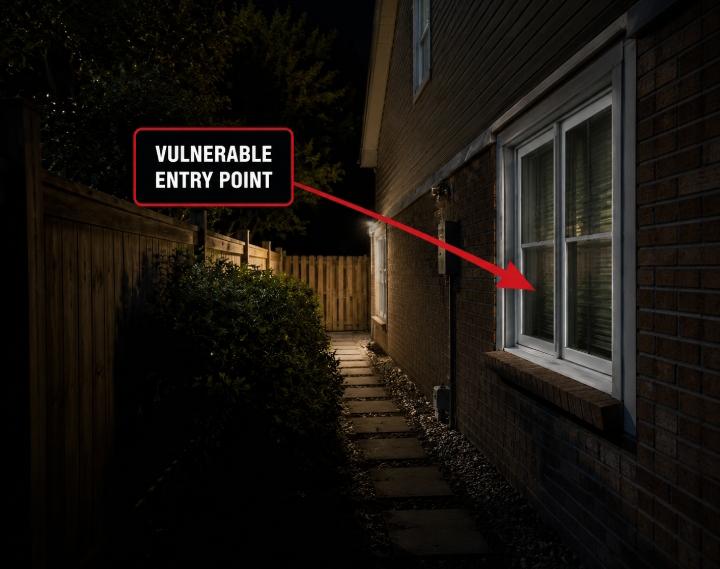
Ground-floor windows are another important security concern in American homes. A window close to the ground may be easier to reach than an upper-floor window, especially when it is located behind a fence, beside a house, or in a part of the yard that is not easily visible from the street.
Side and rear windows deserve particular attention because they may receive less natural surveillance. A window hidden behind landscaping or a tall privacy fence may not be visible to neighbors or people passing by.
The goal is not to turn every American home into a fortress. Instead, homeowners should combine properly functioning locks with reasonable visibility, appropriate lighting, and additional security measures where the risk justifies them.
Ways to improve ground-floor window security
- Keep accessible windows locked whenever they are not being used.
- Check that window locks are functional and not damaged.
- Consider professionally installed window security products where appropriate.
- Use window sensors as part of an alarm system.
- Improve lighting around dark side and rear areas.
- Trim vegetation that creates excessive concealment directly beside windows.
- Avoid leaving expensive items clearly visible through easily accessible windows.
A window that is technically locked but hidden from view may still deserve more attention than a highly visible window near the front of the house. When inspecting your property, think about both physical security and visibility.
Entry Point #3 — Back Doors (Commonly Cited: 22%)
The back door is one of the most commonly overlooked security points in a home. Homeowners often think carefully about the front entrance while paying less attention to the door leading to the backyard, patio, deck, or side of the property.
This can be especially important in suburban neighborhoods where the backyard is hidden by privacy fencing, trees, or the layout of neighboring homes. A back entrance may receive less attention from people outside the property.
Your back door should be treated as a genuine primary security entrance. It should have appropriate locking hardware, a properly maintained frame, and adequate visibility around the area.
A practical back-door security checklist
- Keep the door locked when it is not actively being used.
- Inspect the frame and surrounding structure for damage.
- Improve visibility around dark patios, decks, and rear entrances.
- Consider a door sensor or alarm contact.
- Avoid leaving spare keys in obvious outdoor hiding places.
- Store ladders and tools securely.
- Check whether outdoor furniture or other objects create unnecessary concealment.
Motion-activated lighting can improve awareness around a rear entrance, but lighting is only one layer of security. It works best when combined with secure doors, properly locked windows, visibility, and appropriate detection technology.
Entry Point #4 — Attached Garages (Commonly Cited: 9%)
Attached garages are a common feature of American homes, particularly in suburban areas across states such as Texas, Florida, Arizona, California, Ohio, Michigan, and many other parts of the country.
If your home has an attached garage, there are two separate areas to consider: the large garage door facing the driveway and the interior door connecting the garage to the house.
Many homeowners focus on the automatic garage door opener but forget about the internal door. That door should be treated as an important barrier between the garage and the living space.
Do not forget what is stored in the garage
Garages often contain tools, bicycles, lawn equipment, ladders, sports equipment, and other valuable property. Keeping the garage organized and securing valuable items can improve both security and safety.
- Keep the garage door closed when it is not being used.
- Check that the automatic door opener is working properly.
- Secure the door connecting the garage to the house.
- Do not leave valuable tools and equipment easily accessible.
- Store ladders securely when they are not being used.
- Consider appropriate garage-door monitoring where useful.
Entry Point #5 — Basements and Basement Windows
Basements are particularly important to consider in many American homes, especially in regions where basement construction is common, including parts of the Midwest, Northeast, and other areas with colder climates.
Basement windows may be partially hidden below ground level or surrounded by window wells. Homeowners may also forget about them because they are not used as frequently as windows on the main floor.
Check that basement windows are properly secured and that window wells do not create unnecessary access or concealment concerns. Depending on the home and local building requirements, suitable window-well covers or other security measures may be appropriate.
Entry Point #6 — Sheds, Storage Buildings, and Other Unlocked Areas
Not every burglary-related security problem involves the main house itself. Detached garages, sheds, workshops, storage buildings, and other structures can also contain valuable property.
A homeowner may spend thousands of dollars securing the main house while leaving a backyard shed unlocked with expensive lawn equipment, bicycles, tools, or other valuable items inside.
Walk around your property and identify every structure that contains something valuable. Each building should have security appropriate to the value of what is stored inside and the level of exposure to the outside.
Entry Point #7 — Upper-Floor Windows and Balconies
An upper-floor window is generally harder to reach than a ground-floor window, but being upstairs does not automatically make an entry point impossible to access.
The surrounding property can change the situation. A tree, low roof, balcony, deck, neighboring structure, or other feature may create a route that makes an upper-floor opening more accessible than the homeowner realizes.
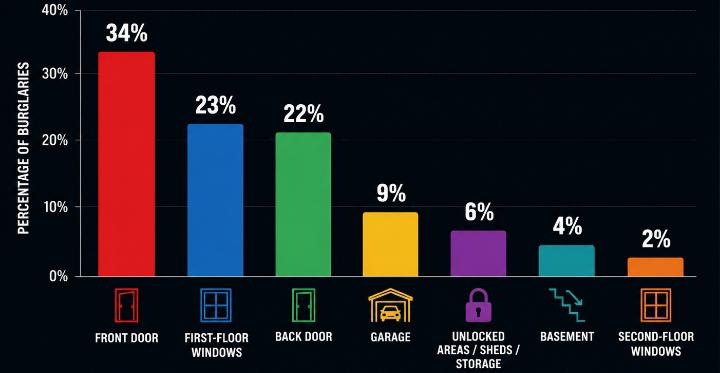
The commonly cited breakdown associated with the ADT/IACHI data lists second-floor windows at a much smaller percentage than ground-floor entry points. However, the exact risk for a particular home depends heavily on its design and surroundings.
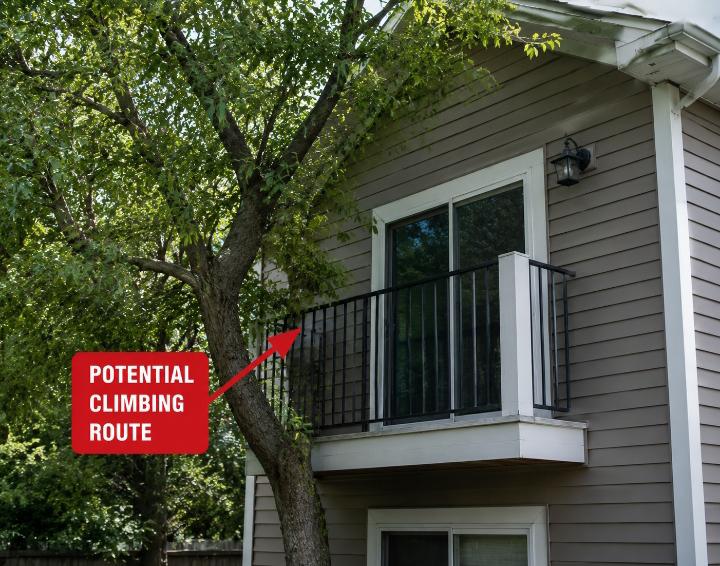
Inspect the area around upper-floor access points
- Are trees growing close to balconies or windows?
- Can a nearby roof or deck provide easier access?
- Are balcony doors properly locked?
- Are sliding doors secured appropriately?
- Are ladders stored in a secure location?
- Does a neighboring structure create an unusual access route?
Commonly Cited Residential Entry-Point Breakdown
| Entry Point | Commonly Cited Share | What to Inspect | Practical Improvements |
|---|---|---|---|
| Front door | 34% | Door, frame, lock, hinges | Strong door hardware, proper installation, good locking habits |
| First-floor windows | 23% | Locks, visibility, accessibility | Secure locks, appropriate security products, sensors, lighting |
| Back door | 22% | Lock, frame, visibility | Strong hardware, lighting, sensors, regular checks |
| Garage | 9% | Garage door and interior door | Secure both doors and protect valuable contents |
| Unlocked areas, sheds and storage | 6% | Doors, locks and valuable contents | Lock separate structures and secure equipment |
| Basement | 4% | Windows and hidden access | Secure windows and improve visibility |
| Second-floor windows | 2% | Climbing routes and balcony access | Secure doors and inspect nearby access routes |
Source note: These percentages reflect a commonly cited residential burglary entry-point breakdown published by ADT and attributed to the International Association of Certified Home Inspectors. They are provided as general reference figures and should not be interpreted as precise current statistics for every U.S. state or city.
Why Your Home’s Weakest Entry Point Matters More Than Your Most Expensive Security Device
Many homeowners buy security products one at a time. They may install a doorbell camera, purchase a smart lock, add a security system, or install a camera overlooking the driveway. These products can all be useful, but home security works best when the entire property is considered as a system.
For example, a home may have a high-quality video doorbell at the front entrance but an accessible side window hidden behind a tall fence. Another home may have a strong front door but leave the garage-to-house door unsecured.
This is why a simple security walkaround can be valuable. Walk around your property during daylight and carefully observe the areas that are hidden, poorly lit, rarely used, or protected by weak doors and windows.
Ask yourself these questions:
- Which entrance is easiest to reach?
- Which entrance is least visible from the street or neighbors?
- Which door or window is most likely to be left unlocked?
- Are there dark or concealed areas around the property?
- Could a nearby object or structure make an upper-floor opening easier to reach?
- Are detached garages, sheds, or storage buildings properly secured?
Common Home Security Mistakes American Homeowners Make
- Focusing only on the front door: Back doors, side doors, garages, and windows also deserve attention.
- Ignoring the backyard: Privacy fences and landscaping can reduce visibility around rear entrances.
- Leaving windows unlocked: Especially windows that are easy to reach from the ground.
- Relying on one security device: A camera, alarm, lock, or light is only one layer of protection.
- Forgetting the garage-to-house door: Attached garages create an additional entrance to consider.
- Leaving ladders and tools outdoors: Store equipment securely when it is not in use.
- Creating excessive concealment: Dense landscaping directly beside doors and windows can reduce visibility.
- Assuming an upstairs window is automatically safe: Trees, roofs, decks, and balconies can change accessibility.
Also see: How Burglars Choose Their Targets and How to Avoid It
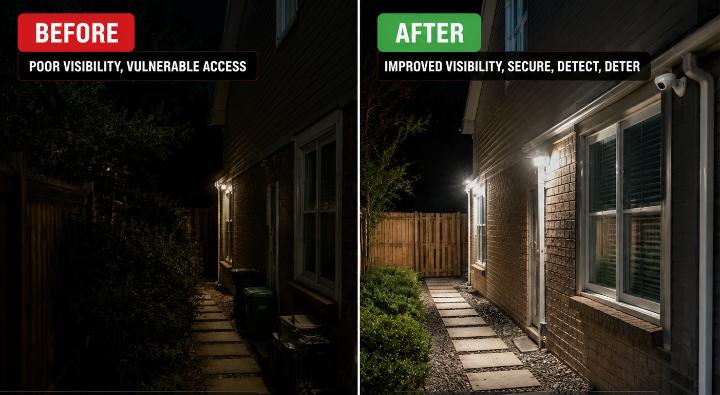
A Simple Priority Order for Securing Your Home
If your security budget is limited, you do not have to purchase every security product at the same time. A sensible approach is to identify the most accessible and vulnerable areas first.
- Secure every door that leads into the home. Check the door, frame, hinges, and locking hardware.
- Secure accessible ground-floor windows. Pay special attention to windows hidden from public view.
- Improve visibility around the property. Address dark or concealed areas.
- Protect back doors, side entrances, garages, sheds, and storage areas.
- Inspect climbing routes to upper floors. Look at trees, roofs, decks, balconies, and nearby structures.
- Add detection and monitoring where appropriate. Door and window sensors, alarms, cameras, and other tools can provide additional layers of security.
The best security plan is usually not based on buying the most expensive device. It begins by understanding how your property is laid out and fixing the weaknesses that are easiest to overlook.
Conclusion: Secure the Weakest Entry Point First
So, where do burglars usually enter a house first? There is no single percentage that applies perfectly to every American home, city, or state. However, doors and windows consistently deserve serious attention, and commonly cited residential burglary data places the front door, ground-floor windows, and back door among the major entry points.
The most important lesson is not to blindly copy a statistic from another neighborhood. Instead, use the available data as a starting point and inspect your own property.
Which entrance is easiest to reach? Which window is hidden from view? Which door is most often left unlocked? Is there a dark side passage? Is your garage-to-house door properly secured? Are there trees, decks, roofs, or other structures that make an upper-floor window easier to reach?
Once you answer those questions, you can spend your home-security budget more intelligently. Start with the weakest and most accessible entry points rather than simply buying the most expensive security product you can find.
Next read: 10 Best Smart Door Locks for Home Security in 2026
💬 Which Entry Point Surprised You Most?
Was it the front door? A hidden side window? The back door? The garage? Or the fact that upper-floor windows are not automatically safe? Tell me in the comments which part of your home you think needs the most attention.
📬 Stay Updated on Home Security
Add your email to receive practical home-security guides, safety checklists, and new articles straight in your inbox. No spam ever.

Borni Franklin is the founder of LotsHomeGuide and a home security researcher with over 5 years of experience studying real-world burglary patterns, property vulnerabilities, and practical protection strategies. He has tested home security products, analyzed how intruders select targets, and built free tools to help everyday homeowners assess and improve their safety. Every article on LotsHomeGuide is written from hands-on research — not recycled generic advice. Based in the USA. Read full information about Borni Franklin on our About Us page.