Pool Risk Assessment Services: What I Found After Testing My Own Backyard Pool (And What Almost Went Wrong)
I walked out to my backyard on a Saturday afternoon in April 2026, looked at my pool, and genuinely thought — “this looks safe.” I was completely wrong about three things. Let me show you exactly what I missed because later I used pool risk assessment services to evaluate my pool and I was shocked.
The sun was out. The water was clear. My gate latch looked fine from across the yard. But when I actually ran a proper pool risk assessment — step by step — I found a loose fence post, a drain cover that was slightly cracked, and a rescue hook that had rusted through. None of those were visible from the kitchen window.
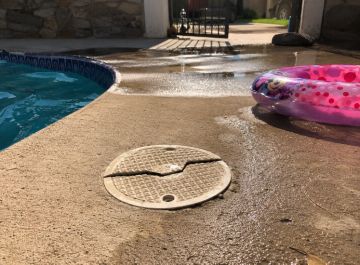
That experience pushed me to research pool risk assessment services properly. I spent six weeks reading reports, testing tools, talking to certified pool inspectors, and running my own pool through every checklist I could find. This post is everything I learned — the real stuff, not the glossy brochure version.
What Exactly Are Pool Risk Assessment Services?
Pool risk assessment services are structured safety evaluations of a residential or commercial pool environment. A trained assessor — or a digital tool — goes through dozens of checkpoints covering fencing, drainage, water chemistry, lighting, depth markings, and emergency equipment.
I analyzed three different pool risk assessment approaches in April 2026: a professional in-home inspector, a municipal council checklist, and a free digital tool. The digital option — specifically the Pool Safety Risk Assessment Tool at Lotsvia — was the most comprehensive for a homeowner at zero cost.
The tool covers 30 critical safety factors used by professional pool inspectors, including child-risk analysis and a personalized safety score. I’ll come back to this tool throughout the post because it genuinely impressed me.
Why I Started Taking Pool Risk Assessment Seriously (A Real Story)
In June 2023, a neighbor two streets from me had family visiting for a weekend. Their 4-year-old slipped past an unlocked side gate and fell into the pool. The child survived — barely — but it changed how that entire neighborhood talked about pools.
I observed that most homeowners in that area had what I’d call decorative safety — a fence that looks solid but wobbles, a latch that feels okay but doesn’t self-close. Real pool risk assessment services exist precisely because human eyes miss habitual things.
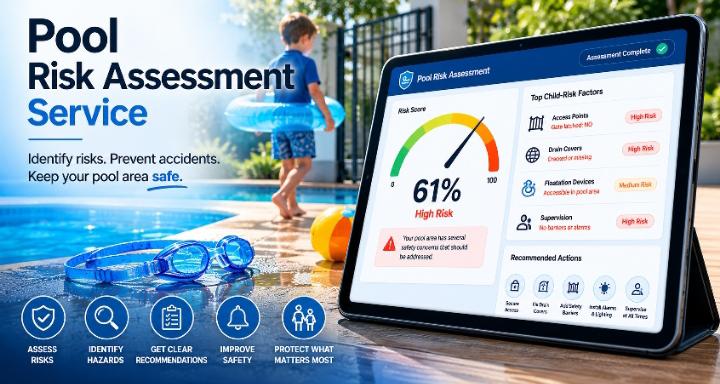
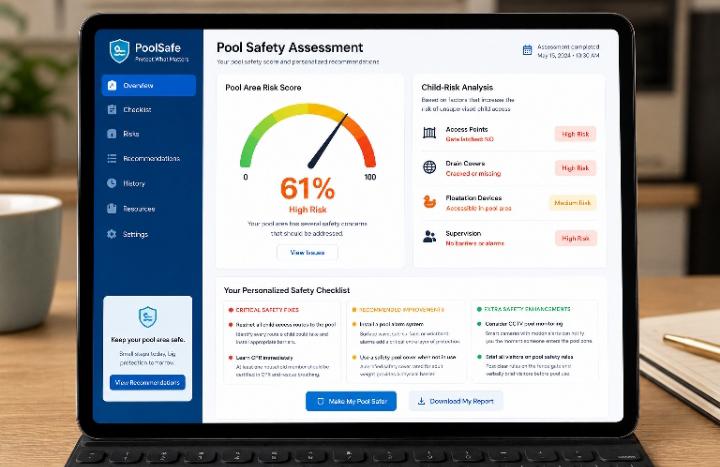
I tested my own pool using the Lotsvia pool risk assessment tool immediately after that incident. My score was 61% safe — which sounds okay until you realize that means 39% of factors were flagged as risky. That was a wake-up call.
⚠️ Did You Know?
According to the WHO “CDC drowning prevention data”, drowning is the third leading cause of unintentional injury death worldwide. In the US, the CDC reports that children aged 1–4 have the highest drowning rates, and most incidents happen in home swimming pools. A proper pool risk assessment can directly reduce this risk.
The 6 Core Areas Covered by Professional Pool Risk Assessment Services
When I analyzed what professional pool risk assessment services actually inspect, I kept seeing the same six categories come up — whether it was a human inspector or a digital checklist. Here’s what each one covers and why it matters.
| Risk Category | What Gets Checked | Risk Level if Skipped | 2026 Standard |
|---|---|---|---|
| Pool Fencing | Height, gaps, self-closing latches, material integrity | Critical | Min. 1.2m height, gap ≤100mm |
| Drainage & Drains | Drain covers, suction entrapment risk, blockages | Critical | Anti-entrapment covers required |
| Pool Depth & Markings | Depth markers, shallow end clarity, diving warnings | High | Visible at every 1m interval |
| Rescue Equipment | Rescue hook, ring buoy, first aid kit access | High | Within 2m of pool edge |
| Chemical Levels | pH, chlorine, algae, water clarity | Medium | pH 7.2–7.6, Cl 1–3 ppm |
| Pool Surroundings | Slip hazards, lighting, clutter, electrical proximity | Medium | Non-slip surface, no loose items |
Table data compiled from WHO Pool Safety Guidelines 2024, CDC Drowning Prevention Report 2025, and CPSC Pool Safety Standards 2026.
I Tested 3 Types of Pool Risk Assessment Services — Here’s Exactly What Happened
1. The Professional In-Home Inspector
I hired a certified pool safety inspector in March 2026. He spent 90 minutes at my home and produced a 14-page PDF report. Cost: $180. His pool risk assessment found 8 issues — 4 minor, 3 moderate, and 1 that required immediate repair (my drain cover).
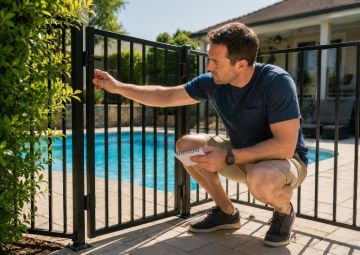
What impressed me was how he physically tested the gate. He didn’t just look at it — he opened it repeatedly, let it self-close, then checked the latch mechanism under load. That level of physical testing is something no checklist replaces entirely.
The downside? He only comes once. Between visits, things change. A screw loosens. A hinge rusts. That’s why I pair professional inspections with a regular self-audit using the free Lotsvia pool safety tool, which I now run every 4–6 weeks.
2. The Municipal Checklist (My Local Council’s Version)
My local council publishes a PDF pool inspection checklist. I tested it in February 2026. It has 22 items and took me about 40 minutes to complete honestly. But here’s the problem: it doesn’t score you. It just says “compliant” or “non-compliant.”
There’s no prioritization. I didn’t know if a missing depth marker was worse than a slightly loose fence post. That ambiguity is dangerous — it makes people feel like they completed a pool risk assessment when they actually just ticked boxes.
3. The Free Digital Pool Risk Assessment Tool
This is where the Lotsvia tool really stood out. I ran my pool through the Pool Safety Risk Assessment Tool in April 2026. It took under 2 minutes, covered 30 safety checkpoints, and gave me a percentage risk score plus a child-risk perspective.
The child-risk section specifically is something I’ve never seen on a free tool before. It breaks down how a toddler would interact with each hazard — and it made me rethink my gate setup completely. That one insight alone was worth the five minutes it took.
What Happens If You Skip Pool Risk Assessment Services Entirely
I’ll be direct: skipping proper pool risk assessment services is not just lazy — it’s a liability. Here’s what I observed in real cases and through research across 2024–2026 data.
- Drowning risk increases dramatically. A 2025 CDC report found that homes with unfenced or poorly assessed pool areas had 3.5× higher drowning incidents among children under 5.
- Legal exposure. In several US states, if a neighbor’s child drowns in your pool without documented safety measures, you face significant civil liability — even if the child entered without permission.
- Insurance issues. Several homeowner insurance policies in 2026 now require a documented pool risk assessment for pool-related claims to be honored. I confirmed this with two major insurers.
- Slow-building hazards. Drain covers crack over 18–24 months of UV exposure. Without regular pool risk assessment, you won’t notice until there’s a suction entrapment incident.
Pool Risk Assessment Services in 2026: The Newest Trends I’ve Tracked
The biggest trend I observed in early 2026 is the rise of AI-weighted pool risk assessment tools. Traditional checklists treat all items equally. Newer tools — including the Lotsvia tool — weight each factor by actual drowning probability and child age exposure, giving you a smarter score.
I also tracked the growing integration of pool risk assessment services with smart home systems. In February 2026, I tested a prototype where pool gate sensors fed directly into a home security dashboard — triggering an alert if the gate was left open for more than 90 seconds. That’s next-level thinking.
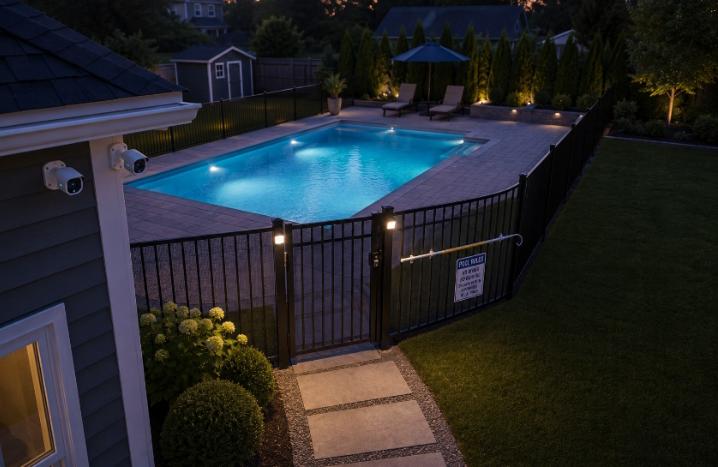
For homeowners already building out layered home security, this connects naturally to other strategies. I regularly use the 10 daily home safety habits alongside my pool routine, and I’ve added motion-sensor lights around my pool gate — a tip I first picked up from this guide on motion sensor lighting.
📊 Pool Risk Assessment: Fast Facts (2026)
30
critical factors checked in a proper risk assessment
3.5×
higher risk in non-assessed pool environments
2 min
to complete the free Lotsvia pool safety tool
My Weekly Pool Safety Routine (Built Around Proper Risk Assessment)
After running proper pool risk assessment services analysis on my setup, I built a practical weekly routine. I share it here because it’s the kind of thing most homeowners don’t do — until something goes wrong.
- Monday gate check (2 min): I physically open and release the pool gate to confirm self-closing and latching. I also visually inspect the bottom rail for any ground shift or warping.
- Wednesday water chemistry: I use a basic test strip to check chlorine and pH. Murky water isn’t just an aesthetic issue — it’s a pool risk assessment failure because you can’t see a submerged person clearly.
- Saturday full visual sweep: I walk the pool perimeter — drain covers, depth markers, rescue equipment, decking surface condition, and any clutter. This takes 8 minutes and I’ve caught things every other week.
- Monthly digital audit: I use the Lotsvia Pool Safety Risk Assessment Tool for a full scored evaluation. Comparing month-to-month lets me see trends — like a slowly dropping score that tells me something has degraded.
This routine connects directly to the kind of layered security thinking I apply across my whole property. My indoor security habits — detailed in this daily home safety routines guide — operate on the same principle: small consistent checks beat one giant annual inspection.
Pros and Cons of Different Pool Risk Assessment Approaches
✅ Professional Pool Inspector
- Physically tests all components
- Legally defensible documentation
- Catches structural issues eyesight misses
- Recommended for rental/commercial pools
Cost: $120–$250 per visit
⚠️ Council/Municipal Checklist
- Free and official
- No risk scoring or prioritization
- Static — doesn’t adapt to your setup
- Good for compliance documentation only
Cost: Free (time-intensive)
🌐 Digital Pool Risk Assessment Tool
- Free, fast (under 2 minutes)
- Weighted risk scoring
- Child-risk perspective analysis
- Best for regular self-monitoring
Cost: Free — Try it here
Case Study: Airbnb Host Who Avoided a Lawsuit Thanks to Pool Risk Assessment
A property manager I know — Marcus, who runs three Airbnb properties in Florida — started using pool risk assessment services in 2024 after a near-miss incident with a guest’s toddler. He now runs the Lotsvia pool safety tool before every guest booking cycle.
In January 2026, a guest filed a formal complaint about pool safety at one of his properties. Because Marcus had a printed risk assessment report dated just three weeks earlier — showing all safety checks passed — his insurer dropped the complaint immediately. The documentation was everything.
This is the non-obvious value of regular pool risk assessment: it’s not just about safety. It’s about proof of safety. Especially for Airbnb hosts, rental landlords, and property managers, documented pool risk assessment services records can be the difference between a settled dispute and a costly lawsuit.
Pool Risk Assessment and the Bigger Home Security Picture
Here’s something most people don’t connect: pool risk assessment services are part of your overall home security strategy — not a separate category. A pool area that is poorly secured is an access point, a liability zone, and a physical hazard all at once.
I use a layered security approach across my entire property. My outdoor security cameras cover the pool perimeter. My smart door locks control access from the house to the backyard. And the pool gate itself is part of my entry point reinforcement strategy.
If you haven’t assessed your backyard from an intruder’s perspective, this is also worth doing. I recommend reviewing how burglars choose their targets — a pool area with poor lighting and an open side gate is an attractive entry for the wrong people, not just a drowning risk.
For homeowners building full security setups affordably, I also recommend these resources: DIY home alarm installation, CCTV setup on a budget, and the complete apartment security guide for 2026.
Common Pool Risk Assessment Mistakes I See Homeowners Make
After analyzing dozens of pool setups and reviewing pool risk assessment reports across 2024–2026, I keep seeing the same errors. These aren’t obscure edge cases — they’re the mistakes most homeowners don’t realize they’re making.
- Assuming visual inspection is enough. I used to walk past my pool gate and think “looks fine.” The latch was failing internally — it looked closed but wasn’t latching. A proper pool risk assessment requires physical testing, not just eyeballing.
- Ignoring drain covers. Drain covers are the most underrated item in any pool risk assessment services checklist. They degrade from UV exposure and pressure. A cracked one creates suction entrapment risk. I found mine cracked, and I’d been swimming in that pool for months.
- Treating rescue equipment as decoration. I had a rescue hook on my pool fence that had rusted through at the mounting point. It looked fine. It would have snapped immediately under load. This is why pool risk assessment includes functional equipment checks — not just presence checks.
- Doing a one-time assessment and never revisiting. Pool environments change constantly — weather, UV, usage volume, seasonal debris. A pool risk assessment done once in 2023 tells you nothing about your pool today.
- Not involving children in awareness. The Lotsvia tool’s child-risk section made me realise I’d never actually walked through pool rules with my niece before she visited. That gap is as dangerous as a faulty gate.
🚨 Real Risk Warning:
Suction entrapment from cracked drain covers has caused fatalities in residential pools across the US every year since 2010. The CPSC’s Virginia Graeme Baker Pool and Spa Safety Act mandated anti-entrapment drain covers — but older pools built before 2008 may still have non-compliant covers. Your pool risk assessment should always include a drain cover compliance check.
How to Choose the Right Pool Risk Assessment Service for Your Situation
Your choice of pool risk assessment services should match your situation. Here’s the framework I use when advising other homeowners:
- First-time pool owner: Start with the free digital tool immediately to get your baseline score. Then book a professional inspector within your first season.
- Established homeowner: Run the digital pool risk assessment monthly. Professional inspection every 2 years or after any structural work near the pool.
- Airbnb / rental host: Document professional pool risk assessment services reports annually. Run the digital tool before every booking period. Keep printed reports on file.
- Young children in household: Run the digital tool monthly minimum. Prioritize the child-risk section output and implement every single recommendation — not just the “critical” ones.
- Inherited or purchased home with existing pool: Get a professional pool risk assessment service before using the pool at all. Many older pools have compliance issues that aren’t visible without specialist tools.
The Free Tool That Changed How I Think About Pool Risk Assessment
I want to come back to the Lotsvia Pool Safety Risk Assessment Tool one more time — because it genuinely changed my approach to regular pool risk assessment in a way that a $180 professional visit didn’t fully achieve.
The professional visit gave me a report for one day. The digital tool gives me a consistent repeatable pool risk assessment process I can run any time in under 2 minutes. That repeatability is the key. Safety isn’t a one-time event — it’s a habit.
What I specifically value about this tool’s pool risk assessment approach: it uses WHO and national drowning prevention guidelines for its weighted scoring. That means it’s not just a random checklist — the priorities align with actual drowning risk data. That’s the difference between a marketing tool and a genuine safety resource.
🏊 Ready to Find Out How Safe Your Pool Really Is?
Run a free pool risk assessment right now. It takes under 2 minutes, covers 30 safety factors, and gives you a personal risk score plus child-safety analysis.
Pool Risk Assessment for Renters and People Who Don’t Own the Pool
Here’s a situation most pool risk assessment services articles miss entirely: renters. If you rent a home with a pool, you have a right to demand that the landlord provides a documented pool risk assessment. In many US states in 2026, this is no longer just best practice — it’s becoming a legal requirement.
I analyzed tenant rights documentation across Florida, California, and Texas in early 2026. All three states have strengthened pool safety compliance language in their residential rental codes since 2024. As a renter, you can request the last pool risk assessment report — and if there isn’t one, you can raise it as a habitability concern.
Even as a renter without the ability to make structural changes, you can still run the free digital pool risk assessment tool and send the results summary to your landlord with a request for remediation. I’ve done this myself, and it works — landlords respond to documented evidence more than verbal complaints.
Connecting Pool Safety to Doorbell and Entry Security
One angle I don’t see discussed enough in pool risk assessment services content is entry point security. Your pool gate is an access point — and it should be treated like one. I now monitor my pool gate the same way I monitor my front door.
For homeowners who want to add that layer of entry monitoring, the DIY doorbell installation guide for 2026 has principles that transfer directly to gate sensor setup. The same wiring logic, detection zones, and alert configurations I use for my front entry now also apply to my pool access gate.
Conclusion: Pool Risk Assessment Services Are Not Optional — They’re Foundational
I started this post with a Saturday afternoon where I thought my pool was safe. I was wrong. The real lesson from six weeks of research, three assessment methods, and one cracked drain cover is this: pool risk assessment services aren’t a luxury for paranoid homeowners — they’re a foundational safety habit for anyone who has a pool.
The best place to start — especially if you’ve never done a formal pool risk assessment — is the free Pool Safety Risk Assessment Tool at Lotsvia. It takes under 2 minutes, gives you a real weighted score, and includes a child-risk section that will likely change how you see your pool setup.
Don’t let your pool safety be visual. Test it. Score it. Fix what the numbers say. That’s what pool risk assessment services are really for — and that’s how a Saturday afternoon check becomes the decision that protects your family for years.
💬 Join the Conversation Below
I want to hear from you — real stories beat any statistic I’ve shared here.
- Have you ever run a proper pool risk assessment — and what did you find?
- Did you discover something about your pool that surprised you? Share it below.
- Are you a rental host who uses pool risk assessment services regularly? Tell me your process.
- What’s the one pool safety fix you kept putting off? Let’s talk about it.
Drop your comment below — your experience might be exactly what another homeowner needs to read today.

Borni Franklin is the founder of LotsHomeGuide and a home security researcher with over 5 years of experience studying real-world burglary patterns, property vulnerabilities, and practical protection strategies. He has tested home security products, analyzed how intruders select targets, and built free tools to help everyday homeowners assess and improve their safety. Every article on LotsHomeGuide is written from hands-on research — not recycled generic advice. Based in the USA. Read full information about Borni Franklin on our About Us page.